![]() |
|
Walleye Variant Names: Walleyed Pike |
|
|
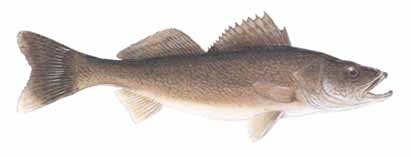
Description: Stizostedion is Greek and vitreum is Latin, meaning "pungent throat" and "glass," respectively. The latter is probably a reference to the species' large eyes. As is typical of perches, the walleye is equipped with two separate dorsal fins. The anterior fin has spines, and the posterior dorsal has 19-22 soft rays. The anal fin has 12-14 rays and two spines. The body is generally mottled with dark blotches on a yellowish-to-greenish brown background. Colors on the lower body shade to white on the belly. The lower lobe of the tail fin has a light tip. Walleyes are obvious carnivores with teeth in the jaws and on the roof of the mouth. |
|
|
Biology: Walleyes are early spring spawners. They are generally nocturnal with most activity, including spawning, occurring at night. In the spring, spawning begins when water temperatures reach 45-50° Fahrenheit. Fish begin to move upstream into tributaries. Typically, spawning takes place on riffles after fish have moved upstream, but in lakes it may also take place on rip-rap dams or reefs (as in the Great Lakes). Eggs are scattered at random by females who are accompanied by several males that fertilize the eggs. Walleye eggs are adhesive and stick to the substrate. At water temperatures of 57°F, they hatch in about seven days. There is no nest building, and no parental care for eggs or fry. Young walleyes are fast growers and may attain lengths of ten inches or more during their first year if conditions are favorable. Although young fish may consume crustaceans and various insects and their larvae, adults are primarily piscivorous. Walleyes typically live to be 7-8 years old and weigh 12-15 pounds. However, indi |
|
|